
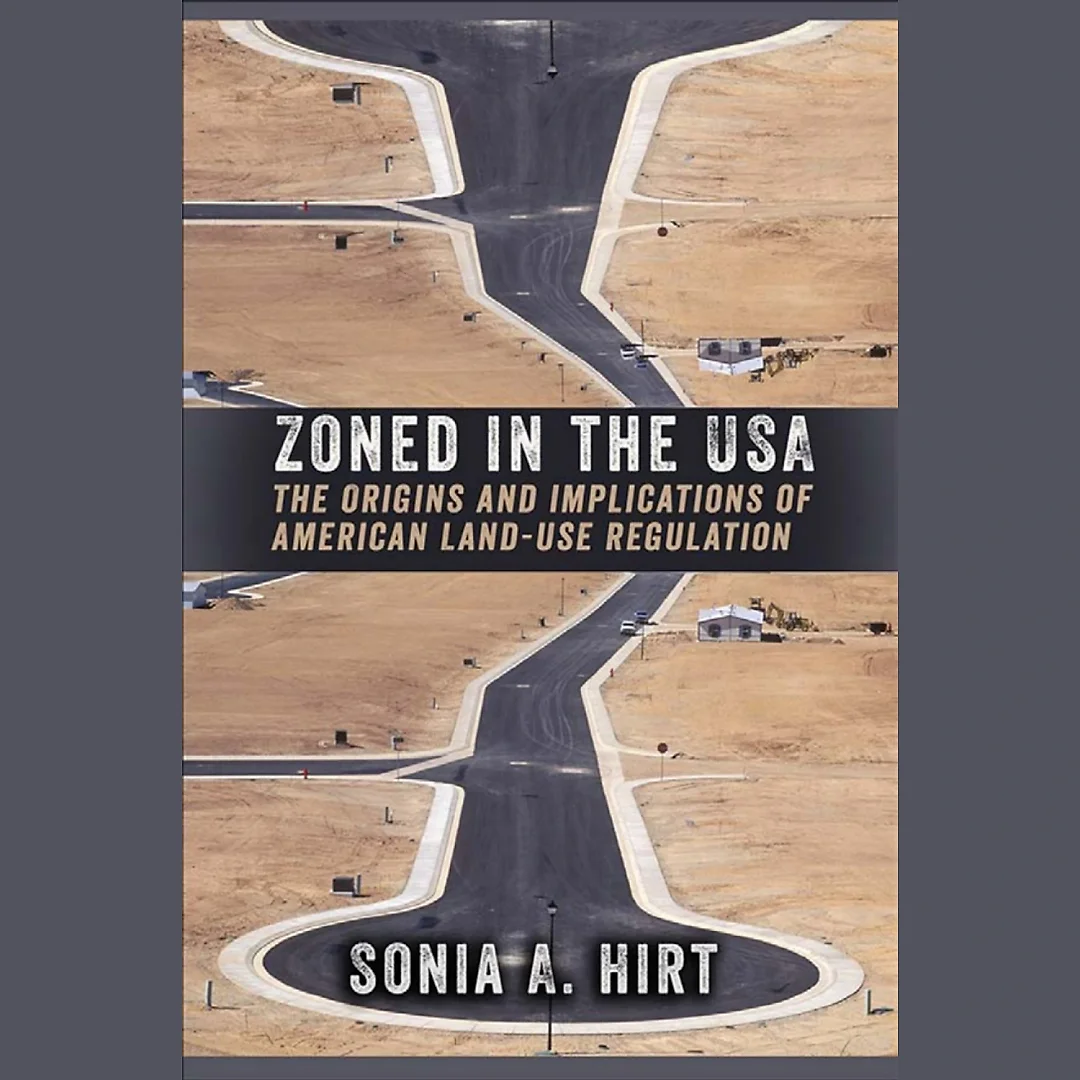
Zoned in the USA: The Origins and Implications of American Land-Use Regulation
In stockBuy More Save More!
The more you buy, the more you save

Zoned in the USA: The Origins and Implications of American Land-Use Regulation
$80.00
Why are American cities, suburbs, and towns so distinct? Compared to European cities, those in the United States are characterized by lower densities and greater distances; neat, geometric layouts; an abundance of green space; a greater level of social segregation reflected in space; and perhaps most noticeablya greater share of individual, single-family detached housing.
In Zoned in the USA, Sonia A. Hirt argues that zoning laws are among the important but understudied reasons for the cross-continental differences. Hirt shows that rather than being imported from Europe, U.S. municipal zoning law was in fact an institution that quickly developed its own, distinctly American profile. A distinct spatial culture of individualism - founded on an ideal of separate, single-family residences apart from the dirt and turmoil of industrial and agricultural production - has driven much of municipal regulation, defined land-use, and, ultimately, shaped American life.
Hirt explores municipal zoning from a comparative and international perspective, drawing on archival resources and contemporary land-use laws from England, Germany, France, Australia, Russia, Canada, and Japan to challenge assumptions about American cities and the laws that guide them.
Book Details
- Author: Sonia A. Hirt
- Publisher: Cornell University Press
- eBook ISBN: 9780801454714, 0801454719
- Print ISBN: 9780801479878, 0801479878
- Other ISBNs: 9780801453052, 9780801454707


